
Commercial Electrical vs. Residential Electrical: Why Expertise Matters
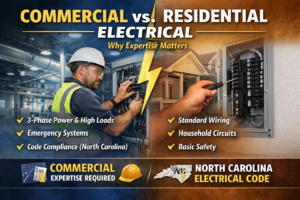
Many people assume electrical work is the same whether it’s in a home or a business—but commercial electrical systems are significantly more complex and require specialized expertise, licensing, and code compliance. In North Carolina, commercial electrical work must follow stricter standards outlined in the North Carolina Electrical Code (based on the National Electrical Code – NEC) along with additional requirements for commercial buildings, safety systems, and occupancy types.
Residential electrical systems typically involve lower voltage loads, standard breaker panels, and wiring designed for household appliances and lighting. Commercial environments, however, often require three-phase power, higher voltage distribution, heavy equipment circuits, and complex lighting systems such as high-bay LEDs, automated controls, and energy-efficient infrastructure.
North Carolina code also places greater emphasis on life safety systems in commercial buildings. This includes proper installation of emergency lighting, exit signage, fire alarm circuits, and electrical infrastructure designed to support large occupancy spaces. Commercial electricians must understand load calculations, service sizing, grounding systems, and conduit requirements that are far more demanding than residential work.
Another major difference is permitting and inspections. Commercial electrical projects in North Carolina often involve detailed engineering plans, municipal approvals, and multiple inspections to ensure safety and code compliance.
Working with a contractor experienced in commercial electrical systems ensures projects are completed safely, efficiently, and fully compliant with state and local codes. Whether it’s a commercial build-out, lighting upgrade, or new electrical service installation, specialized commercial expertise makes all the difference.