
Commercial Electrical Maintenance in Charlotte, NC
Commercial electrical maintenance scoped around how your facility operates, not a generic checklist.
- Planned inspections aimed at identifying developing issues before they become larger operational problems
- A plan shaped around your building, your equipment, and your schedule
- Findings you can actually use for repair priorities and budgeting
- Straight answers on what needs attention now, what can wait, and why
Request a Free Quote
Tell us about your commercial electrical project, and we’ll get back to you soon.
Commercial Electrical Maintenance for Active Facilities
Commercial electrical maintenance gives facility teams a planned way to review electrical conditions, document concerns, and identify follow-up needs before issues become harder to manage. The scope can include inspections, appropriate testing, and maintenance activity based on the facility and confirmed plan.
Equipment, operating demands, environment, maintenance history, and the consequence of an interruption can all shape priorities and timing, so the maintenance approach should be facility-specific rather than a generic checklist.

What Our Commercial Electrical Maintenance Service Covers

Electrical Condition Inspections
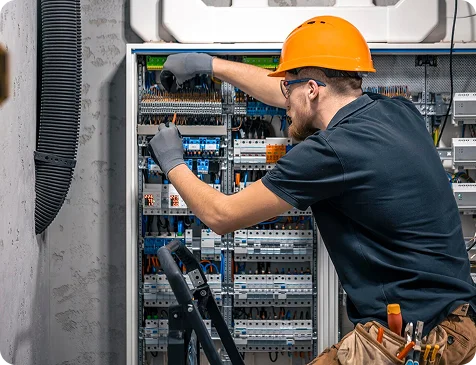
We evaluate accessible panels, wiring, switches, and distribution equipment to spot damage, overheating, or loose connections before failures occur. Inspection scope and de-energization requirements are tailored directly to your facility’s specific, pre-agreed project plan.

Preventive Equipment Testing & Service
Some conditions may not be obvious during a basic walkthrough. Depending on the equipment and confirmed scope, testing may help identify issues that are not visible through observation alone. The applicable methods and equipment should be defined for the specific facility rather than assuming every maintenance visit includes the same testing.
Corrective Follow-Up After Maintenance
Maintenance may identify a condition that needs corrective work beyond the agreed visit. When that happens, the finding should be documented and the next step discussed based on its urgency, operational impact, and the approved maintenance scope. Additional repair, replacement, or upgrade work may require separate authorization or scheduling.
Maintenance Findings, Reports & Recommendations
Useful maintenance documentation should make it clear what was reviewed, what conditions were identified, and which items may need follow-up. The exact reporting format and level of detail should be based on the confirmed maintenance scope.
What Shapes a Commercial Electrical Maintenance Plan
The ideal maintenance scope depends on your facility’s equipment, operating demands, maintenance history, and business impact. Gathering key details beforehand (such as building type, critical areas, operating hours, and known electrical issues) ensures a tailored approach rather than a one-size-fits-all checklist.
Effective maintenance programs rely on five core elements:
Facility Priorities: Using equipment history and operational needs to determine focus areas.
Defined Scope & Access: Establishing clear boundaries, included equipment, testing needs, and explicit exclusions.
Maintenance Timing: Setting service frequency based on usage, environment, manufacturer guidance, and facility criticality.
Shutdown Considerations: Balancing tasks that can occur during normal operation against work requiring planned power isolations.
Clear Boundaries & Follow-Up: Keeping routine service separate from major upgrades or repairs, while delivering clear findings so facility teams can decide on monitoring, corrective action, or future budgeting.
By establishing these parameters early, facility managers maintain clear expectations for standard visits while properly planning larger, separate capital projects.
Signs Your Facility Needs Electrical Attention
Some electrical conditions show warning signs before they become larger operational problems. If any of the following issues are recurring or worsening, it may be time to schedule an electrical review rather than wait for the next planned maintenance visit.
- Recurring breaker trips: Repeated trips are a reason to have the affected circuit or equipment evaluated rather than continually resetting the breaker.
- Flickering or dimming lights: Could be wiring, could be a voltage issue, could be equipment that is aging out.
- Heat, discoloration, or unusual odor near electrical equipment: These conditions warrant prompt professional evaluation.
- Recurring power loss to equipment or circuits: Repeated loss of power should be evaluated rather than assuming the cause is electrical or mechanical without inspection.
- Cracked, loose, or discolored outlets and covers: One of the easiest warning signs to catch on a normal walkthrough.
- A change in your space or equipment load: New equipment or added demand is reason enough to have things reviewed, even off your normal schedule.
Smoke, active arcing, or exposed energized parts are not routine maintenance issues. Clear the area and follow the appropriate emergency response procedure.
Our Commercial Electrical Maintenance Process
Commercial construction moves in phases, and the electrical scope needs to move with it. Here is roughly how a project progresses from initial pricing to final handoff.
Review Facility Needs
Define the Maintenance Scope
Perform the Agreed Maintenance
Review Findings and Priorities
Plan Corrective Follow-Up
Coordination on all of this runs through the general contractor or construction manager, the owner or developer, the architect or engineer of record, and any other trades the project involves.
Commercial Facilities and Maintenance Considerations
Office Buildings
Maintenance planning should account for occupied workspaces, general power, lighting, common electrical systems, and access needs that may affect staff or tenants.
Retail Stores
Maintenance may involve customer-facing operating hours, lighting, general power, equipment dependence, and the need to plan service windows around business activity.
Warehouses & Distribution Centers
Planned maintenance can help facility teams identify developing electrical concerns and plan follow-up around larger spaces, equipment power, lighting, loading areas, and logistics operations.
Healthcare Facilities
Electrical maintenance in healthcare settings may involve additional operating, access, and critical-system considerations. Keep the scope high-level unless the facility requirements and company capabilities are confirmed.
Manufacturing Facilities
Maintenance planning may need to account for production schedules, equipment power, operating demands, and access constraints. Project or upgrade work beyond routine maintenance should be handled as a separate scope.
Commitment to Quality
We take pride in delivering dependable workmanship, clear communication, and maintenance solutions that support the long-term performance of your commercial electrical systems.
Why Choose Carolina Commercial Electric for Electrical Maintenance
Electrical problems often develop gradually before becoming major disruptions. Recognizing the warning signs early can help prevent unexpected downtime, safety hazards, and costly repairs.
Facility-Specific Planning
The maintenance scope is built around the building, equipment, operating demands, history, and access conditions instead of applying the same checklist to every facility.
Operations-Aware Scheduling
Maintenance planning considers operating hours, critical areas, access, testing requirements, and whether any isolation or shutdown may be needed before work is scheduled.
Clear Findings and Priorities
Findings are documented so facility teams can separate issues that may need prompt attention from items that can be planned, monitored, or budgeted for later.
Follow-Up Beyond the Inspection
When maintenance identifies a corrective electrical need, the next step can be scoped separately as a repair, replacement, or larger upgrade based on the confirmed condition.
Client Testimonials
Read what clients have shared about working with Carolina Commercial Electric.
“Todd and Tyler did excellent work on our project in Rock Hill. Communication was clear from the first conversation through completion, and they took the time to answer our questions. Were very pleased with our experience with Carolina Commercial Electric.”
Frank Hartmann
“Great experience with Todd and Tyler! Carolina Commercial Electric handled our new office electric in Gastonia with care and professionalism. We especially appreciated communication and attention to detail. Happy to recommend them to other local businesses.”
Emily Dawson
“Carolina Commercial Electric Was Awesome with their communication, Installation, and their workers were 2nd to none!!!! Highly recommend Them for any Electrical Job!!!”
Joe Elliott

Frequently Asked Questions
How often should commercial electrical maintenance be scheduled?
There is no universal schedule. Frequency should be based on the equipment, operating environment, condition, usage, manufacturer guidance, facility criticality, maintenance history, and applicable requirements.
How long does a routine electrical inspection usually take?
Duration depends on facility size, agreed scope, equipment, access, testing requirements, and whether any planned shutdown or isolation is needed. Timing can be estimated once the maintenance scope is defined.
Can electrical maintenance help improve energy efficiency?
It can surface things like damaged components, abnormal loads, lighting, or equipment issues that might be contributing to inefficiency. It is not a guaranteed fix for your bill, though. Bigger efficiency work belongs on its own project.
Is maintenance necessary for newer commercial buildings?
Yes. A newer system still needs planned inspection based on its equipment, its use, and manufacturer requirements. Age alone does not tell you how often it needs attention.
What happens if you find a problem during maintenance?
A maintenance finding should be documented and evaluated based on its condition and potential operational impact. The next step may be monitoring, corrective work, replacement, or a separate upgrade depending on the confirmed scope.
Can maintenance be scheduled outside normal business hours?
Scheduling should be planned around the facility’s operating needs and access requirements. If after-hours or weekend service is important, confirm availability with the team while the maintenance scope is being discussed.
Plan Your Commercial Electrical Maintenance
Share the facility location, building type, known issues, operating hours, maintenance history if available, and any critical areas or access constraints. Carolina Commercial Electric can review that information and confirm the appropriate next step and maintenance scope.