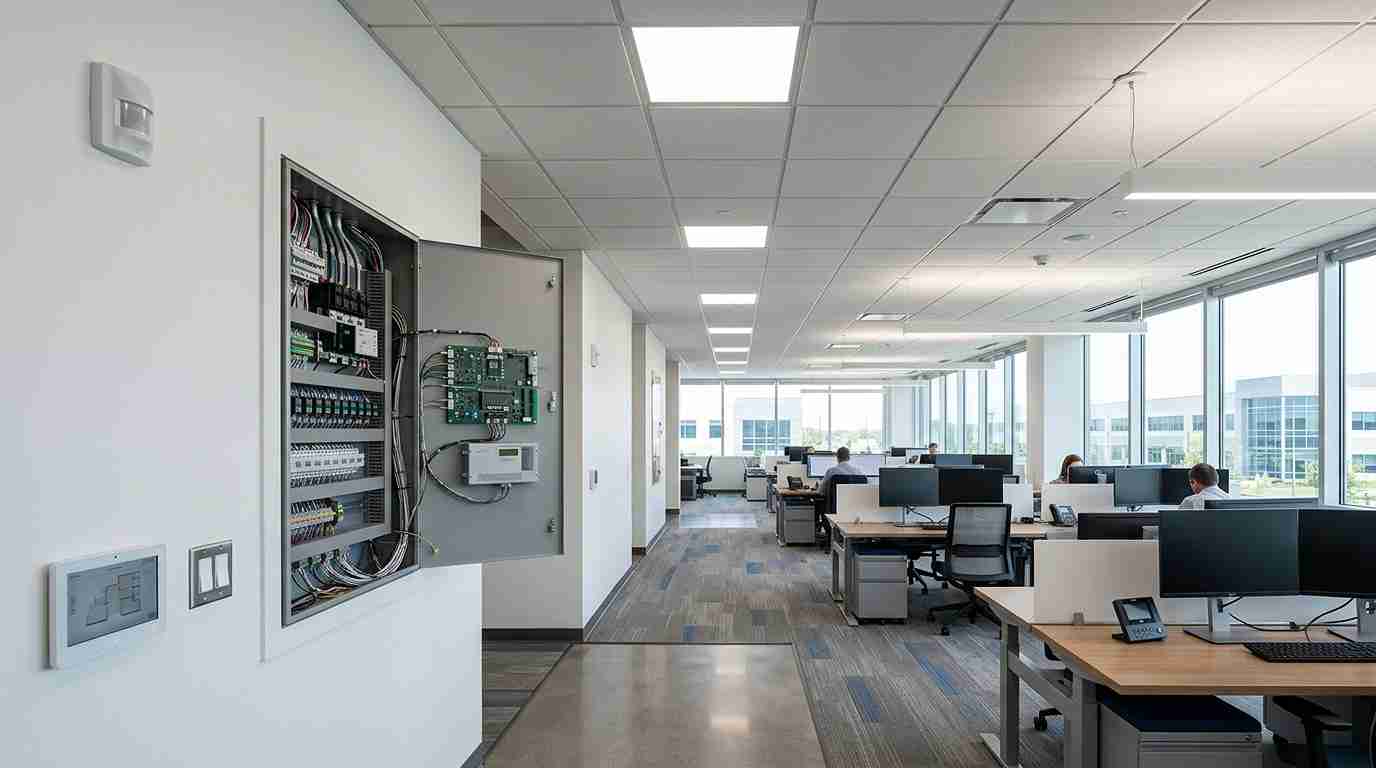
Electrical work in a commercial property involves more than installing equipment, wiring circuits, or connecting new fixtures. Depending on the project, businesses may need to check electrical code requirements, permits, plan reviews, inspections, existing conditions, and local requirements before work begins.
That makes commercial electrical code compliance an important part of project planning and not just a final inspection concern. New construction, tenant improvements, renovations, repairs, equipment additions, and electrical system alterations can all raise different compliance questions.
What applies to your project depends on the project scope, jurisdiction, adopted code edition, and the authority having jurisdiction (AHJ). This article provides general information rather than legal advice or a substitute for a project-specific code review. Current requirements should always be confirmed with the applicable authority before electrical work begins.
Understanding Commercial Electrical Code Compliance
The electrical code sets requirements for how electrical systems are designed and installed. The goal is to protect people and property. It is a technical and safety framework, and it applies to the way electrical work is planned, built, and verified.
It helps to separate three different ideas:
– Code requirements come from adopted codes and their amendments, as interpreted and enforced by the AHJ.
– Company marketing claims describe what a contractor says about its own work. They are not a substitute for code requirements. The applicable code and the enforcing authority ultimately determine that.
– Other rules include building, fire, plumbing, accessibility, and zoning. These may also apply to commercial projects, but this article focuses on electrical code compliance only.
For a business owner or facility manager, compliance should be considered when the project is being scoped, not after the installation is complete. Moreover, the exact requirements can vary based on the work being performed and the property involved. A lighting upgrade, for example, may raise different questions from a service upgrade or a new equipment connection. Existing electrical conditions can also affect what is required when a commercial space is renovated or repurposed.
Which Electrical Code Applies in North Carolina?
In North Carolina, the State Electrical Code is administered through the NC Office of State Fire Marshal (NC OSFM). The North Carolina State Electrical Code consists of an adopted edition of the National Electrical Code (NEC) plus North Carolina amendments .
As of September 18, 2026, NC OSFM lists the 2020 State Electrical Code (the 2020 NEC with North Carolina amendments) as the current code for commercial and industrial occupancies, while the 2023 State Electrical Code remains under an indefinite delay. Since code editions can change, this statement should be treated as dated information. Confirm the current edition with NC OSFM before relying on it for planning.
Local enforcement also matters. In Charlotte and Mecklenburg County, project-specific permitting, plan review, and inspection requirements are handled through the applicable local code authority. The AHJ considers the actual project and its circumstances when determining applicable requirements.
When Does Commercial Electrical Work Require a Permit?
For applicable commercial projects in Charlotte and Mecklenburg County, Mecklenburg County Code Enforcement provides permitting, plan review, and inspection services for building, electrical, mechanical, and plumbing work. Its permitting guidance states that appropriate permits are required for commercial work involving new construction, reconstruction, alteration, repair, and the installation, extension, alteration, or general repair of electrical systems.
For a business, this can make permitting relevant to projects such as:
– New commercial construction
– Tenant upfits and build-outs
– Renovations involving electrical systems
– New circuits or equipment connections
– Electrical service, panel, or distribution changes
– Installation, extension, alteration, or general repair of electrical systems
The permitting process is not necessarily identical for every project. Mecklenburg County notes that specific projects require separate permits. These can apply to building, electrical, mechanical, and plumbing work. Most commercial projects and commercial new construction require plan review, although the specific process depends on the project.
That is why businesses should determine permitting requirements before work starts rather than assuming that a particular type of electrical task always follows the same process.
How Inspections Fit Into the Project
Permits and inspections are related, but they are not the same step. Where inspections are required, the local code authority evaluates permitted work according to the applicable project requirements and inspection process.
For permitted commercial electrical work, inspections may be required at different stages depending on the project. Mecklenburg County provides commercial electrical inspection services and project-specific scheduling resources.
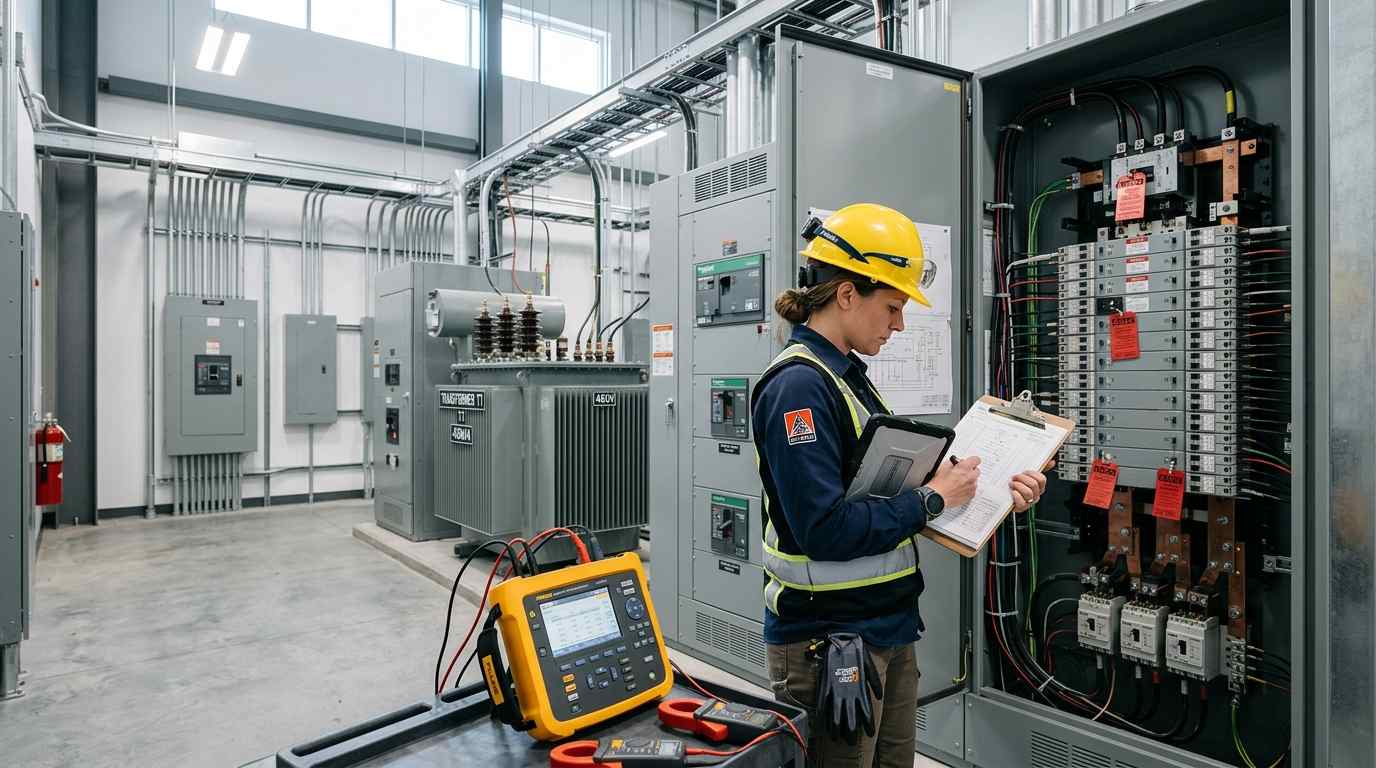
The County’s checklist for electrical inspections provides examples of items that may be reviewed, including:
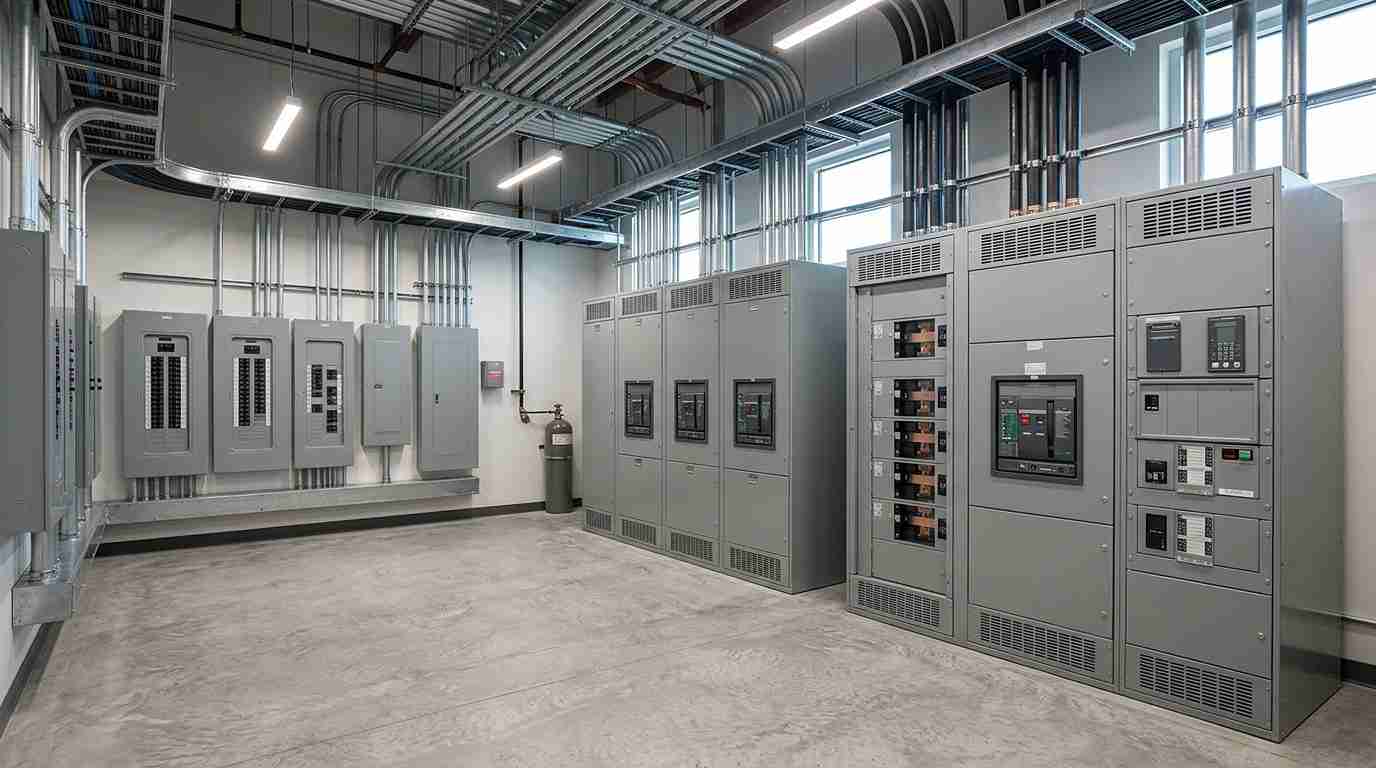
– Properly rated panelboards and equipment
– Correct overcurrent protection
– Appropriate conductor sizes and types
– Required working clearances
– Grounding
– Proper equipment and device installation
However, this checklist is not a complete list and does not certify the proper operation of equipment or systems. For this reason, don’t treat a checklist as a universal formula for determining whether work will be approved. The inspection requirements and stages depend on the project. Coordinate work with the applicable authority, so required inspections can be scheduled and completed at the appropriate stages.
Existing Buildings and Renovations
Existing conditions and the scope of an alteration matter more than they might first appear. A renovation or a new equipment load may affect more than the immediate fixture or device being changed. Existing electrical conditions, equipment loads, circuit protection, and other system characteristics can affect the scope of the work.
Situations that typically deserve a closer look include tenant upfits, facility upgrades, lighting projects, and new equipment connections. For these kinds of projects, it helps to work with a team that can review the electrical scope against current project requirements and coordinate with the AHJ as needed.
Contractors such as those providing tenant upfit electrical services and commercial electrical construction can help scope the work. However, the applicable code and enforcing authority determine what a project must satisfy.
Questions to Answer Before Electrical Work Begins
Before work starts, the owner, contractor, property team, and other project stakeholders should clarify these questions and coordinate with the AHJ where required.
– What is the exact scope? Identify what is being installed, removed, altered, or upgraded.
– What existing conditions need to be considered? Existing panels, circuits, equipment, wiring, and available capacity can affect the project.
– What equipment and electrical loads are involved? New commercial equipment may require dedicated circuits or changes to power distribution.
– Are permits required? Confirm the applicable permitting process with the local authority.
– Will plan review be required? Commercial projects can have different review requirements depending on their scope.
– What inspections are required and at what stages? Coordinate inspection milestones with the applicable code authority.
– Are there access or occupancy constraints? Business operations, tenant schedules, and occupied spaces can affect project planning.
– Are there owner, landlord, or property-management requirements? These may create additional project coordination requirements beyond the electrical code itself.
Verify Requirements With Official Sources
Since code and local processes change, always verify your project details against official sources rather than using a generalized online checklist. These sources are more appropriate for determining current requirements. The applicable AHJ and project-specific scope ultimately determine which requirements apply.
For projects in North Carolina, check the NC Office of State Fire Marshal for the current State Electrical Code and related interpretations.
For Charlotte and Mecklenburg County projects, Mecklenburg County Code Enforcement provides information on permitting, commercial inspections, and electrical inspection considerations.
Planning Commercial Electrical Work?
Commercial electrical compliance starts with understanding the project before work begins. Whether you are planning a new construction project, tenant upfit, facility renovation, lighting upgrade, equipment connection, or electrical repair, the scope can affect permitting, inspections, equipment, and installation requirements.
Carolina Commercial Electric completes commercial electrical work in alignment with applicable electrical code requirements and local regulations. For ongoing system needs, commercial electrical maintenance is another relevant service option.
Share your project type, property location, scope of work, and any available plans or specifications so the electrical work can be scoped appropriately.