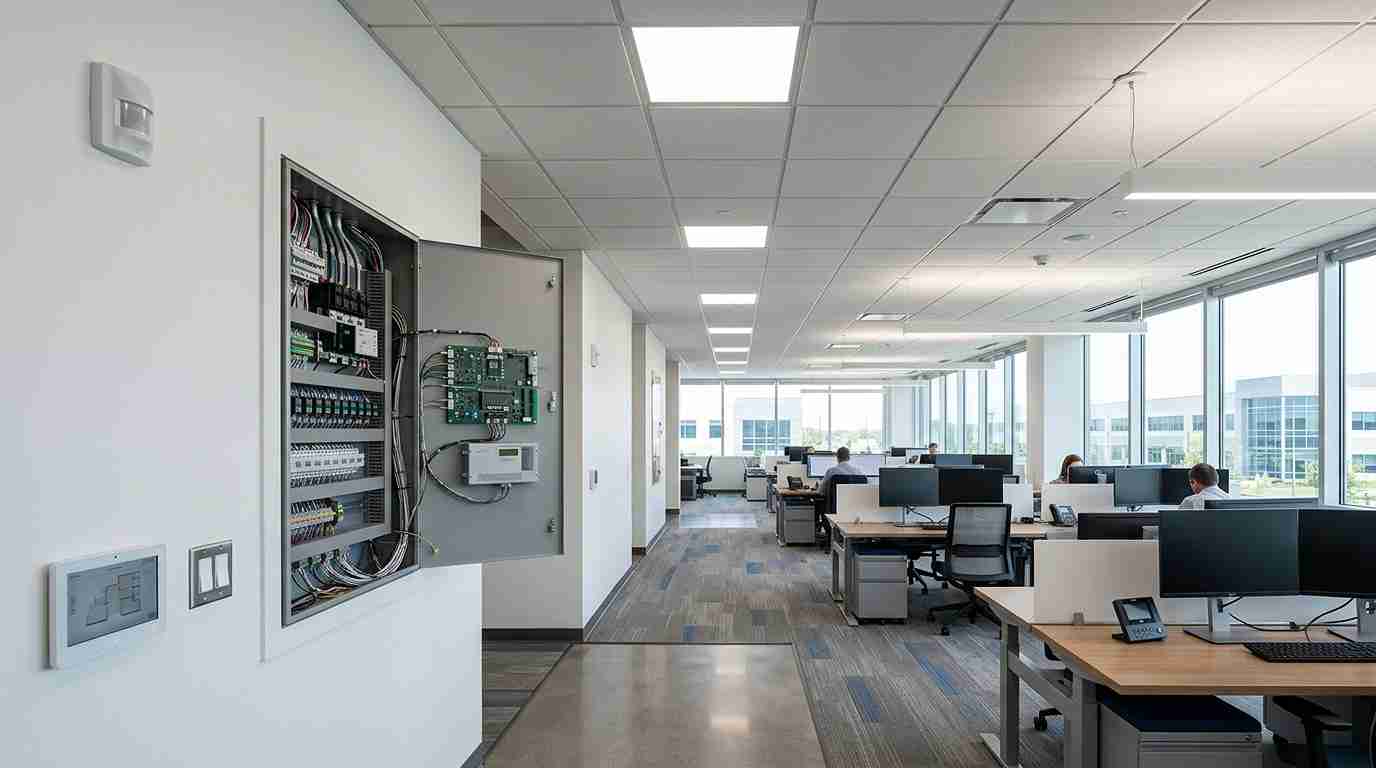
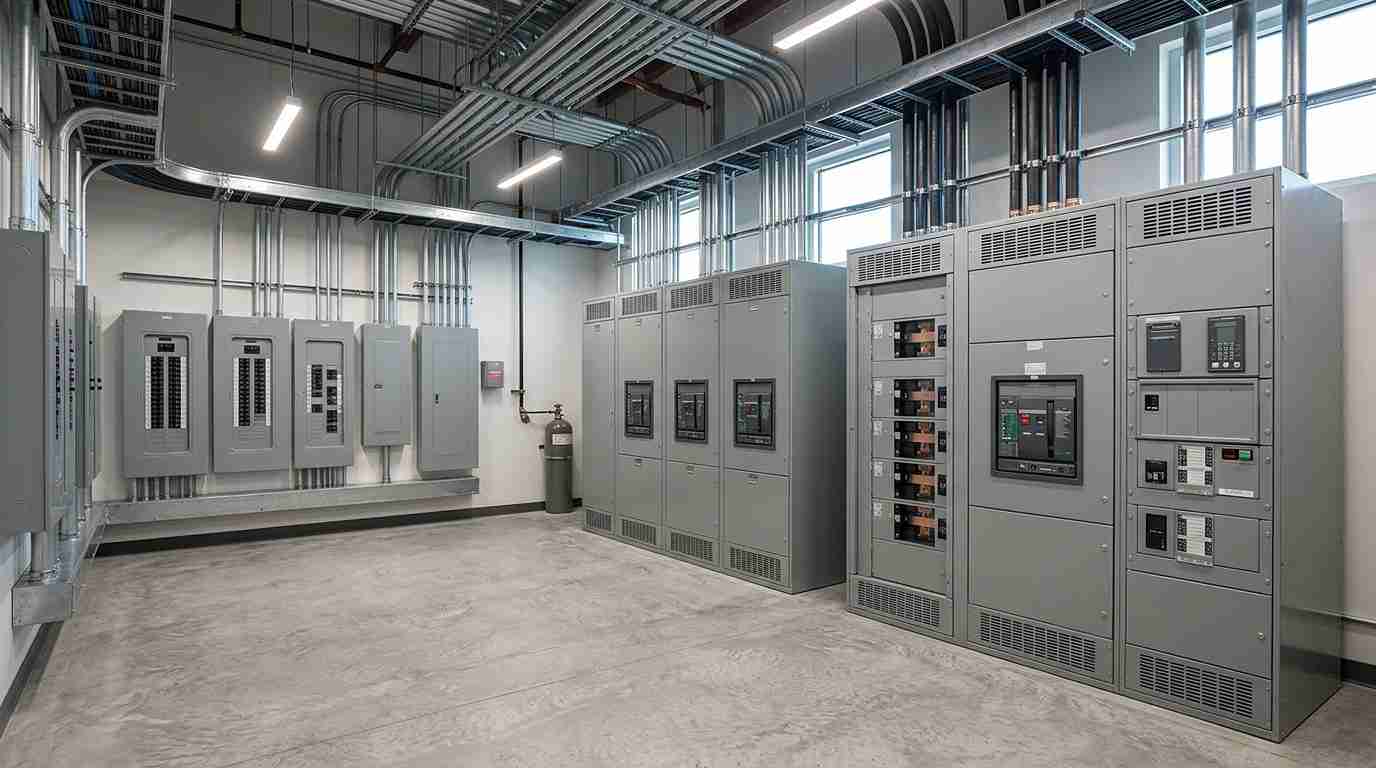
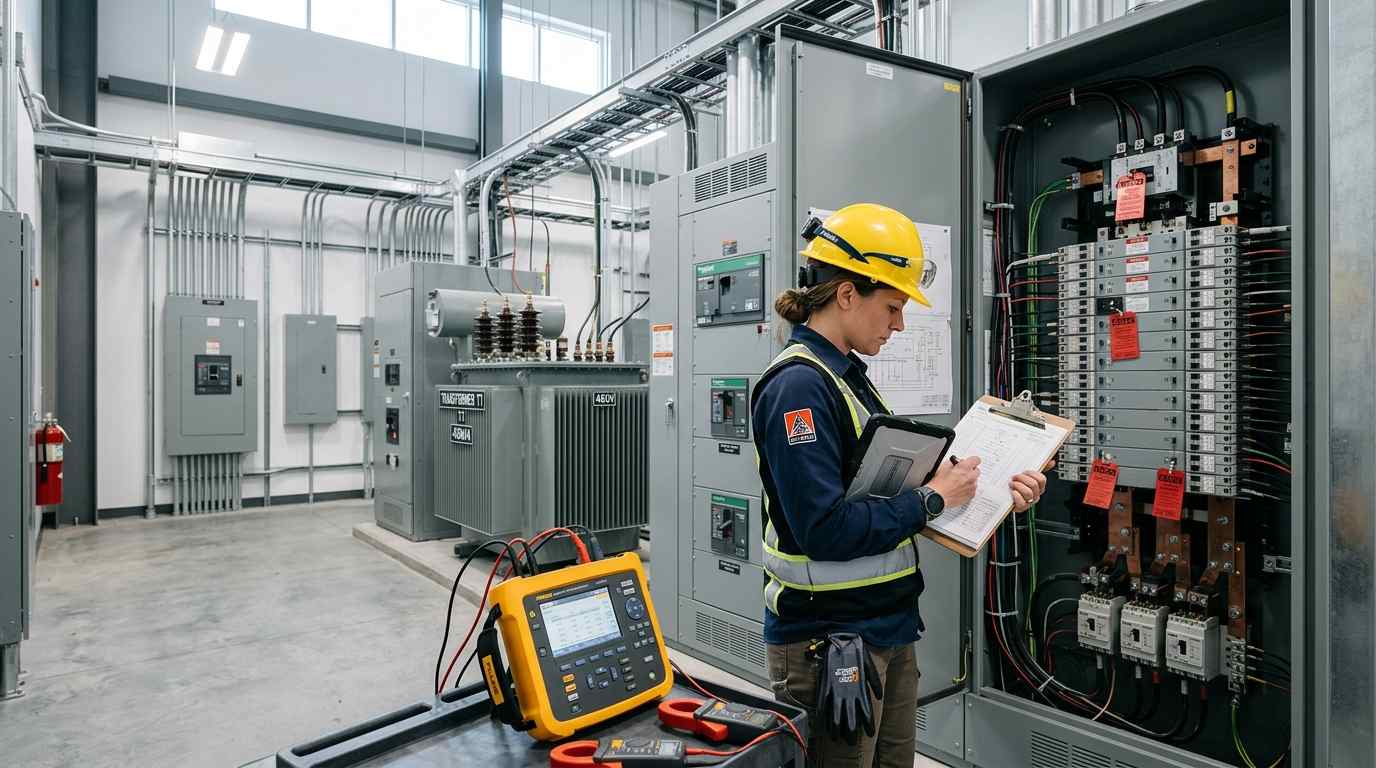
There is no single testing interval that applies to every commercial electrical installation in the United States. The right frequency depends on the equipment itself, its condition, where it operates, how critical it is to your operations, and what your maintenance program and applicable requirements call for.
That means a facility should not simply choose an arbitrary calendar interval and apply it to every panel, breaker, transformer, and distribution component. A better approach is to establish a documented inspection and testing schedule based on the actual equipment and conditions at the property.
This guide explains what determines testing frequency, the difference between inspection and electrical testing, when an earlier review may be appropriate, and how facility teams can build a practical maintenance schedule.
The Short Answer – Testing Frequency Is Equipment- and Condition-Based
For U.S. facilities, there is no blanket rule requiring every commercial electrical installation to undergo the same testing cycle.
NFPA 70B provides a framework for electrical equipment maintenance that considers equipment type and condition when establishing maintenance intervals. Its published materials show that maintenance frequency can vary according to equipment condition and may be adjusted based on findings.
OSHA’s electrical requirements address recognized hazards, but 29 CFR 1910.303 does not set one universal recurring testing interval for all commercial electrical installations. So a three- or five-year cycle should not be treated as a blanket U.S. rule.
The practical takeaway is simple: commercial electrical testing should be planned around the equipment, its condition, how it is used, and the requirements that apply to the facility. For a deeper look at how these programs are structured, our overview of preventive electrical maintenance is a useful resource.
What Determines How Often Electrical Equipment Should Be Inspected or Tested?
Several factors can influence an appropriate inspection and testing schedule:
- Equipment type: Panelboards, switchgear, breakers and protective devices, transformers, disconnects, and grounding and bonding systems each have different maintenance needs.
- Condition: Wear, contamination, corrosion, overheating, damage, loose connections, or previously identified deficiencies can all justify closer review.
- Operating environment: Heat, moisture, dust, chemicals, vibration, and heavy loading change risk and how often equipment warrants attention.
- Criticality: Equipment whose failure would interrupt production, healthcare, refrigeration, or data and IT operations may justify a different maintenance strategy than a non-critical circuit.
- History: Repeated trips, faults, repairs, abnormal thermal findings, or prior test results should directly influence the schedule.
- Outside requirements: Manufacturer instructions, insurer or lease terms, the authority having jurisdiction (AHJ), and your facility’s written maintenance program may all apply.
Inspection, Electrical Testing & Preventive Maintenance Are Not the Same Thing
These terms often get used interchangeably, but they describe different activities, and understanding the difference helps you plan.
Electrical inspections generally involve examining accessible equipment and looking for signs of damage, overheating, contamination, corrosion, labeling problems, access issues, or other abnormal conditions.
Electrical testing uses appropriate methods and instruments to evaluate particular equipment or protective functions within an agreed scope. The specific tests depend on the equipment and maintenance program.
Preventive electrical maintenance is a broader program. It can include inspections, testing, cleaning or servicing, documentation, corrective work, and adjustments to future maintenance intervals.
It is also important to distinguish recurring maintenance from acceptance or commissioning testing. New electrical work may require verification, inspection, or commissioning as part of bringing it into service. The exact scope depends on the project, equipment, plans, and applicable requirements.
For existing facilities, the goal of ongoing maintenance is not simply to perform a test because a certain number of months has passed. The goal is to maintain a useful understanding of equipment condition and address problems before they become larger operational or safety concerns.
When Should a Facility Be Reviewed Earlier Than Planned?
A facility may need an earlier inspection or testing review when conditions change or warning signs appear.
Examples include:
- Repeated breaker trips, unexplained outages, or recurring faults.
- Heat discoloration, unusual odors, abnormal noise, or flickering.
- Water intrusion, contamination, physical damage, or a fault event.
- Major renovations, tenant changes, new equipment, service or panel changes, or significant load additions.
- Deficiencies found in a previous inspection or test, or an unexpected equipment failure.
If you notice any of these signs, call a qualified electrical professional. These situations are not do-it-yourself troubleshooting projects. Energized equipment should only be worked on by trained, authorized personnel following proper safety procedures.
What Can a Commercial Electrical Testing Program Include?
Depending on the equipment, operating conditions, and maintenance objectives, a commercial electrical testing program may include:
- An inventory of major electrical distribution assets
- Equipment condition assessment
- Visual inspection of accessible panels, switchgear, disconnects, and distribution equipment
- Testing of selected breakers or protective devices
- Evaluation of grounding and bonding functions where appropriate
- Documentation of findings and corrective actions
- Recommendations for the next maintenance interval
Infrared thermography may be used in some maintenance programs, but it is not a substitute for other inspection and testing and requires proper interpretation. Keep in mind that not every maintenance visit includes every method listed here. The actual scope should be confirmed for your facility.
Who Should Set the Testing Interval?
A qualified electrical professional should evaluate the facility and help the owner or facility team establish an appropriate inspection and testing schedule. That schedule should account for the applicable maintenance standard or program, manufacturer recommendations, equipment condition, facility risk, previous inspection and testing results, AHJ requirements, and relevant insurer or contractual requirements.
A written schedule also gives facility managers a record of why particular equipment is being reviewed at certain intervals and when that schedule should be reconsidered.
This is also where compliance comes in, and where precision matters. Since requirements vary by equipment, workplace, adopted standards, and jurisdiction, no single interval should be labeled “code-required” without authoritative support for that exact equipment and location.
If your planning touches on regulatory obligations, our guide on commercial electrical code compliance explains why those boundaries shift from one facility to the next.
How to Build a Practical Inspection & Testing Schedule
A facility can approach this as a management process rather than a technical one. The goal is not to build a calendar for its own sake, but to create a maintenance process that responds to the facility’s actual condition and needs.
The sequence looks like this:
- Inventory your main electrical distribution assets and flag the critical equipment.
- Review manufacturer information, previous test and maintenance records, and any known deficiencies.
- Establish initial intervals using qualified professional judgment and the applicable maintenance standard.
- Coordinate outages and access with operations so work can be performed safely.
- Record findings, corrective actions, and dates—then adjust intervals as conditions change.
Frequently Asked Questions
Is every commercial electrical installation required to be tested every five years?
No. There is no universal U.S. five-year rule for all commercial installations. “Five-year EICR” language is associated with UK electrical inspection practices. U.S. intervals depend on equipment, applicable standards, condition, and other requirements.
Does new electrical work need testing before it is put into service?
New work typically requires verification and inspection appropriate to the project and applicable requirements. The exact testing or commissioning scope depends on the plans, equipment, and jurisdiction involved.
Can electrical testing require a shutdown?
Some tests and maintenance activities may require de-energization or a planned outage. The scope and safety approach must be determined by qualified personnel in coordination with your operations team.
What records should a facility keep?
A facility should maintain equipment identification, inspection and test dates, findings, corrective work performed, and recommended next intervals. The format depends on the maintenance program and facility needs, but consistency matters more than any specific template.
Set a Maintenance Schedule Based on the Actual Facility
A defensible schedule starts with the actual facility: its equipment, condition, operating environment, critical systems, maintenance history, manufacturer guidance, and applicable requirements.
Regular commercial electrical testing can be an important part of a broader preventive electrical maintenance program, but the schedule should be established around the equipment and its condition.
Carolina Commercial Electric provides commercial electrical maintenance, including comprehensive electrical inspections and preventive equipment testing, as part of its commercial electrical maintenance offering. To discuss an inspection and testing plan built around your facility, request a maintenance assessment with our team.